

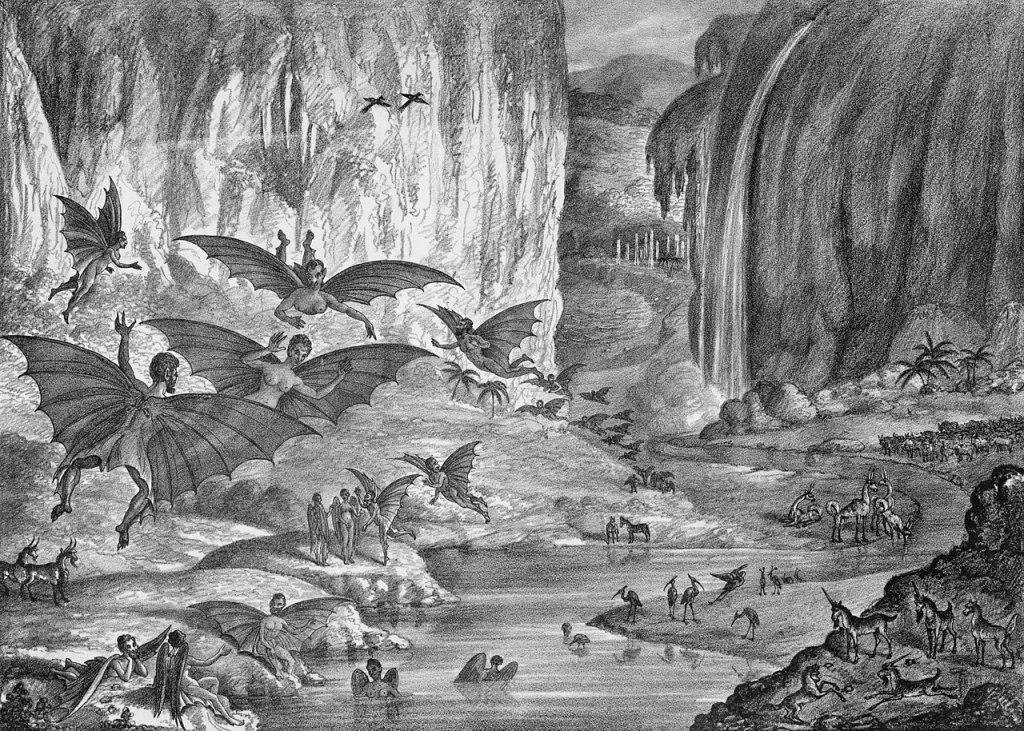
Human type life forms and a variety of animals had been discovered on the Moon, it was claimed in the New York Sun newspaper of August 21st, 1835, when it published a series of sensational articles claiming that astronomer Sir John Herschel had discovered life on the moon. The articles described fantastical scenes observed through a powerful new telescope, including lush landscapes, unicorns, bipedal beavers, and bat-like humanoids called “Vespertilio-homo.” The detailed and imaginative descriptions captivated readers and sparked widespread excitement and curiosity.
The series, known as the Great Moon Hoax, was entirely fabricated by journalist Richard Adams Locke. The purpose of the hoax was to increase newspaper sales and satirize both the gullibility of the public and the speculative nature of contemporary scientific writing. The articles included elaborate illustrations and scientific jargon to lend credibility to the fictitious discoveries.
Despite the implausibility of the claims, the public eagerly embraced the stories, and the New York Sun enjoyed a significant boost in circulation. It took several weeks before the hoax was exposed, but by then, the newspaper had solidified its reputation and readership.
The Great Moon Hoax is one of the earliest examples of “fake news” and highlights the power of media to shape public perception and stir imagination. It also serves as a cautionary tale about the importance of critical thinking and skepticism in the face of sensational claims.
Images of the fake moon and inhabitants.

 eBooks, Books, Stories, Jokes, Funny Stuff, Quotes, short stories